

Search
Plumbing
How To Turn Off a Hot Water Heater
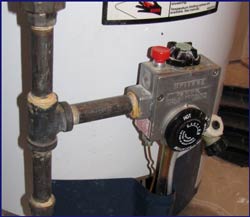 This article primarily deals with how to turn off a gas hot water heater. Failure to follow the proper steps may result in damage to the internal elements of the water tank. There are only a handful of steps and they are easy to follow.
In most homes you have one of two types of water heaters, gas and electric. For the purposes of this discussion, propane would also be considered gas. If you have an electric hot water heater, see the article 'How To Shut Down an Electric Hot Water Heater' for instructions on this type of unit.
Got other issues that you need to address? See 'troubleshooting gas water heaters' for all types of gas water heater problems 'troubleshooting electric water heaters' for information on all types of electric water heater problems.
Identifying Water Heater Types
Not sure which kind you have? There are a couple of telltale signs that make it easy to identify which style you have. For an electric water heater, the wiring coming into the top of the water heater gives it away. Also, electric water heaters do not have vents, since they do not burn anything to heat up.
A gas water heater is identified by the vent at the top. This can be metal or plastic, depending on the efficiency level of your hot water heater. A gas water heater also has a gas line that attaches to the unit near the bottom.
How To Identify a Gas Hot Water Heater
Burner Assembly
A telltale sign of a gas water heater is the gas valve and burner assembly at the bottom of the water heater. The gas valve will have a heavy metal gas pip attached to it. It will have a burner assembly below it that will be covered by a removable plate. This plate will protrude around the lower gas line and thermocouple connector.
It is usually possible to see a pilot light through a window after the outer cover plate is removed. Gas water heaters use a burner that has an open flame to heat the water.
Fume Vent at Top
Gas hot water heaters burn natural (or propane) gas to heat the water. Burning fossil fuel produces harmful gases. Therefore, a gas hot water heater will always have a vent of some kind.
The type of vent depends on the efficiency of the hot water heater. Higher efficiency units will use a plastic pipe the vent through an outside wall. Lower efficiency unit will vent into a masonry or metal chimney. Electric water heaters will not have any type of venting apparatus.
Gas Lines
Of course it stands to reason that that a gas hot water heater would use natural or propane gas to operate. This type of gas is a low pressure fuel that requires a fairly large piping system for delivery.
The burner assembly mentioned above will need piping connected to it. This piping will be obvious when you look at the water heater. It will be attached to the gas valve at the bottom of the unit and usually be connected on the left side when you are facing the water heater.
Lack of a Vent
Electric hot water heaters do not have vents. Vents are required on gas water heaters to remove toxic fumes. Electric water heaters do not generate fumes and therefore do not have a vent.
Vents can be made of metal or plastic and usually go into a chimney, metal vent pipe or through an outside wall. An electric water heater will only have the water inlets and a power cable at the top of the unit. NO VENT will be present.
Upper and Lower Access Panels
Electric hot water heaters use heating elements to heat the water. Most of them have two elements, an upper and a lower element. The elements are behind access panels on the side of the water heater. The spacing of these panels will vary, but usually one is near the bottom and the other can be anywhere from the middle of the water heater to near the top.
The panels may be a different color or the same color as the rest of the water heater housing. They are generally held in place by two screws and are easily removed.
A gas water will have a gas valve and burner access panel at the bottom of the water tank only. There will not be any access panels higher up on the housing.
No Gas Burner
An electric hot water heater uses internal heating elements and does not require a burner assembly. On a gas water heater the burner assembly is prominent at the bottom of the hot water heater
Not sure which kind you have? There are a couple of telltale signs that make it easy to identify which style you have. For an electric water heater, the wiring coming into the top of the water heater gives it away. Also, electric water heaters do not have vents, since they do not burn anything to heat up.
A gas water heater is identified by the vent at the top. This can be metal or plastic, depending on the efficiency level of your hot water heater. A gas water heater also has a gas line that attaches to the unit near the bottom.
No Gas Lines
An electric water heater will not have a gas line attached to the water heater. Gas lines are fairly heavy pipes that have large fittings on them. It is called black pipe, since it is black and oily when it is manufactured. The gas line connects at the bottom of the water tank at the gas valve. You will not see any of this on an electric water heater.
Shutting Down and Gas Hot Water Heater
There are four steps to properly shutting down a gas hot water heater:
(1) For working on water pipes or draining the tank, turn the gas valve control to pilot.
(2) For any other work on the hot water heater, turn the gas completely off.
(3) Cool down the water inside of the tank.
(4) Shut off the cold water supply to the hot water tank.
(5) Open a hot water faucet somewhere, (preferably above) in the house.
Step One - Setting a Gas Valve On 'Pilot'
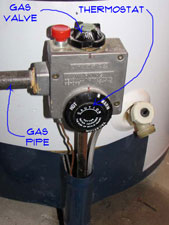 The water heater gas valve is located toward the bottom of your water heater just above the burner chamber. On the top of the gas valve that has various settings on it. The three main settings are 'OFF', 'Pilot' and 'ON'.
Turning the dial to 'Pilot' will shut the gas off to the burner without shutting off the pilot light. This setting can save you the trouble of having to light the pilot again when you are done. This setting should not be used if you are doing any work on the burner assembly or the gas line. It is suitable to use when you are draining the tank or working on the water lines.
Step Two - Turning the Gas OFF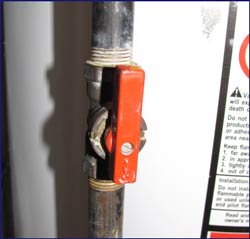
The safest thing to do whenever you work on your gas hot water heater. Leaking gas can explode and is quite dangerous.
First turn the dial on the gas valve to 'OFF'. Turning the gas valve to 'OFF' does not completely shut off the gas. There is a ball valve on the gas piping next to the water heater. This valve should be turned 90 degrees until the handle is perpendicular to the pipe.
With the gas valve shut off, the gas is completely turned off and the water heater is safe to work on.
Step Three - Cool Down the Water
This is an important step. Water that is directly out of the gas hot water tank can be very hot and scald or burn you. Run and considerable amount of hot water through one of the fixtures until the water is just warm. Do not mix it with cold water, run it pure hot. The cold water running into the tank will dilute the hot water and reduce the temperature.
After the water has cooled down, it is safest to work on the water heater.
Step Four - Shut Off the Cold Water Supply
Do not shut the water off if you have not turned the gas going into your gas hot water heater off. If the water continues to heat inside the water heater after the water is shut off the heater will build up too much pressure. If you are sure the water is off, you can turn off the cold water supply.
Step Five - Open a Hot Water Faucet
Opening a faucet will prevent the water heater from developing an air lock. Any attempts to drain the water tank will fail if a faucet is not open to provide air.
It should now be safe to work on your hot water tank.
Step Five - Draining a Hot Water Tank
Most repairs on a gas hot water tank can be made without draining the tank. There are, however a few exceptions that must be noted.
Removing or replacing a gas valve will require the tank to be drained. This part threads directly into the lower portion of the tank. Another activity that requires an empty tank is flushing out the sediment. Clearing out water heater sediment on a annual or semi-annual program is a good maintenance program. Draining the tank is a chore, but the steps required are also required for the sediment flush, so it is really not any extra work.
Where To Next?
After you have completed your repairs you are going to need to get your water heater working again. See the article, 'Starting Up a Hot Water Heater' for instructions. The steps are similar to shutting a water heater down, you just want to get them in the right order.
How To Drain a Water Heater
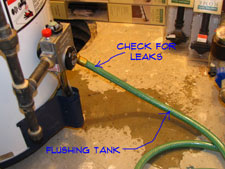 Knowing how to drain a water heater will make doing various repairs and maintenance items on your water tank much easier.
When would you need to drain your tank? A common task is 'removing sediment' and 'flushing the water tank'. Other tasks, such replacing an 'anode rod' or a 'dip tube' will require that the tank be partially or completely drained.
For related information, see 'Troubleshooting Electric Water Heaters' and
'Gas Hot Water Heater Troubleshooting'. These articles contain common problems and the resources to get them fixed.
You also have to drain the tank when you need to 'repair or replace the drain valve'. These valves are prone to leaking of often break when you attempt to tighten them.
With electric water heaters, the heating elements cannot be changed without draining the tank.
Shutting Down the Hot Water Tank
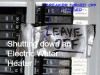 You cannot drain a hot water tank while it is turned on. The heating elements and the tank can be damaged. Not to mention the danger in leaving a tank operational while you are working on it.
The first step will be shutting down the hot water tank. This actually involves a few steps and is different for gas and electric water heaters. The correct procedures for doing this are covered in the articles on 'Shutting Down an Electric Water Heater'
and 'How To Shut Off a Gas Water Heater'. Read this information before proceeding with any draining activities.
Part of the procedure for shutting down the water tank includes cooling the water. This is a safety precaution, the water inside your tank can be very hot and cause burns. It is best to 'cool off the water' prior to working on the tank.
Where Should the Hot Water be Drained To?
Assuming that you have followed the procedure for shutting down the water tank, the water inside the tank should be just warm. This will not damage drains or plumbing fixtures.
A floor drain is the ideal place to drain the water into. Locate a floor drain near your hot water tank.
If you do not have a floor drain, you can drain the water outside. Warm water should not damage concrete or grass. Find a suitable location to drain forty or fifty gallons of hot water to.
Hooking Up a Drain Hose
You will need a hose that is long enough to reach the drain or other location that you are going to drain the water to. The female end of the hose will hook up to the water heater drain valve. You should use a pair of pliers to get it on tight.
Stretch the hose out so that it will drain. The hose should be lower than the drain valve on the water heater. There won't be any pressure when you drain the tank. It will only be gravity that allows the tank to drain.
Allowing Air to Get Into the Water Tank
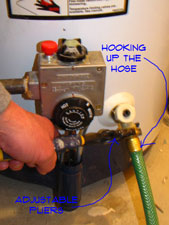 If you followed the 'shut down procedure', you should have opened up a hot water faucet somewhere in the home. This will allow air to get into the tank when the water is draining.
Make sure that the faucet is open, (preferably somewhere above the hot water tank) prior to opening the drain valve. When you are certain that valve is open, you can open the drain valve.
Water heater drain valves do not get used very often, so you may need to use a pair of pliers. Some drain valves are made of plastic, so be careful when you attempt to open it. If you damage the valve, now would be a good time to replace it. See the article on 'replacing a water heater drain valve' for instructions on how to do this.
Draining the Hot Water Tank
It will take some time for all of the water to drain out of the tank. Most hot water heaters have between 40 and 60 gallons of water in them. This would also be a good time to 'flush your hot water tank', see this article for what to do.
Now you should be ready to make repairs or perform other maintenance on your hot water tank.
How To Light a Water Heater
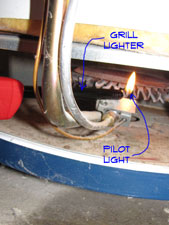 You need to know how to light a water heater when your pilot light goes out. Without the pilot light a gas hot water heater will not work and you won't have any hot water. Lighting the pilot light will take about fifteen minutes.
Not sure if this is your problem? See 'Gas Hot Water Heater Troubleshooting' for a complete listing of all the possible problems and how to solve them.
Lighting Methods
Manual Method
For most hot water heaters, you do not have a choice. You need to use a long match or utility lighter. The reason is that the pilot light is inside of the water heater a few inches and it is difficult to reach. A lighter is a much better choice since the flame will remain constant.
The best tool for the job is a 'Utility' or 'Multi Purpose' lighter. This is the style with a long nose on it. They are ten or twelve inches long, plenty long enough to reach the pilot light inside opening.
Igniter Method
Some water heaters are equipped with an igniter. These are similar to the igniters on a gas grill. The article 'Lighting a Pilot With an Igniter' has information on this method.
Following the Lighting Instructions
Different water heaters have different procedures for lighting the pilot. Usually, there is a waiting period involved before can turn dial to pilot.
Look on the side of your hot water tank and read through the procedure that is required for your water heater. Failing to follow these instructions may result in the pilot not lighting. This topic is discussed further in the article, 'Following Pilot Light Instructions'.
Lighting the Pilot Light
The following is a general description of the steps involved. Make sure you read the instructions on your water heater before proceeding, they may differ from what is stated below.
Make sure that the temperature setting is on its lowest position. Then turn the gas valve to 'Off'. You should wait about ten minutes before you do anything else, or as long as the instructions indicate. There may be some lingering gas that you want to dissipate before you try to light the pilot.
The next step is to remove the outer cover from the burner assembly. It should snap off. There is usually an inner cover that you will also need to remove. A small flashlight would not hurt at this point. Do you see where the pilot assembly is? Good, you want to make sure you have a long match or grill lighter that can reach it.
You will usually turn the dial to 'Pilot' and hold down the button. Make sure you are ready with the lighter or match. If the pilot does not light quick enough the gas valve will shut down and you will have to wait again. Light the pilot and hold the button down for as long as it tells you.
Watch through the glass and make sure the pilot stays lit. Wait the proper amount of time and turn the gas valve to on. After that you can set the thermostat to the desired temperature.
If the water has been off for any length of time the burner should light right away. Make sure it is burning properly and replace the outer cover.
What If the Pilot Does Not Light
You followed the instructions, tried a couple of times and the pilot will not light. Another situation is a pilot light that will not stay lit. What do you do?
You may have another issue. A pilot light that lights initially and then goes out is the sign of a bad 'Thermocouple'. See the article on 'Gas Water Heater Thermocouples' for more information on what to do.
If the pilot light will not light at all, it could be the gas valve that is the problem. See the article 'Hot Water Heater Gas Valves' for information and options on what can be done.
Summary
Following the instructions above, you should have been able to successfully light the pilot light on your water heater. If not it is possible that you have another problem.
Water Heater Pilot Light Igniter
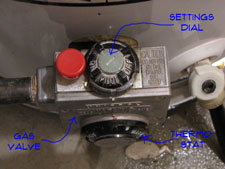 Using a water heater pilot light igniter is easier than matches or hand held lighters. Many newer models have them. You just have to follow the instructions and then depress the button a few times.
Not sure if this is what you need to do? See the article on 'Gas Water Heater Troubleshooting' for a complete list of problems and thier corresponding solutions.
How To Tell If You Have an Igniter
A water heater igniter has a sparking tip that is directed at the location of the pilot light. You should be able to see it above or next to the gas supply line for the pilot light.
The other tell tale sign is the wire that runs from the gas valve to the igniter. Most water heaters do not have any wires attached to the gas valve.
The igniter is also likely to have a separate button that has to be pushed to engage the sparker.
Following the Instructions
The lighting instructions are different on each water heater. Read the instructions and follow the steps. You will usually turn the dial to pilot and hold down the button. Then press the igniter until the pilot lights. Hold the button down for as long as it tells you.
See the article 'Following Pilot Light Lighting Instructions' for information on how to locate the instructions and why it is important to follow them.
Lighting Procedure
The first thing you will want to do turn the temperature setting to its lowest position. Then turn the gas vavle to 'Off'. You should wait about ten minutes before you do anything else. There may be some lingering gas that you want to dissipate before you try to light the pilot.
The next step is to remove the outer cover from the burner assembly. It should snap off. There is a small view window that allows you to see the pilot light. Make sure it is cleaned off. A small flashlight would not hurt at this point.
Watch through the glass and make sure the pilot stays lit. Wait the proper amount of time and turn the gas valve to on. After that you can set the thermostat to the desired temperature.
If the water has been off for any length of time the burner should light right away. Make sure it is burning properly and replace the outer cover.
What If the Pilot Light Does Light
Normally you would get concerned if you followed the instructions and the pilot light failed to light. With an igniter, you may have a problem with the igniter itself. If you have ever used the igniters on a gas grill, you know what I am talking about. They are not always the most positive lighting method.
You can still light the pilot light using a traditional match or long lighter method. You will still need to follow the instructions and go through the procedure again. See the article on 'Manually Lighting a Pilot Light' for more information.
If after you have tried the traditional method, you find that the pilot light won't light or won't stay lit, you likely have another problem. See the article 'Problems With Water Heater Gas Valves' for a pilot light that won't light at all. For those that won't stay lit, it is likely the thermocouple, see the article 'Troubleshooting Water Heater Thermocouples' for instructions on what to do.
Water Heater Lighting Instructions
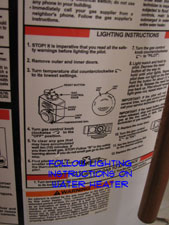 Lighting a pilot light for a gas hot water heater is not a difficult task. However, it can be irritating if you don't follow the instructions for your particular hot water heater.
You need to follow the sequence that is indicated and wait the prescribed amount of time before you attempt to light the pilot. If you don't the gas valve may not allow gas to go to the pilot light. If it doesn't light, you will not have hot water.
Not sure if the pilot light is your problem? See the article 'Troubleshooting Gas Water Heaters' for a complete listing of all the topics and links to resources for solutions.
Locating Water Heater Lighting Instructions
In the Owner's Manual
If you have the 'owner's manual' that came with your water heater, the lighting instructions for the pilot can be found there. Sometimes the manual is in a packet that is attached to the side of the water heater.
If you know the make and model number of your water heater, you can try and find the manual online.
On the Side of the Water Heater
Water heater pilot light instructions are found permanently fixed to the side of the tank. There are usually several steps, that involve waiting. These are meant for your safety in the event there is any unburnt gas left in the air.
The instructions for lighting a water heater pilot light are a little different for the various models. You will want to take the time to read them and make sure you understand the steps involved.
Pay particular attention to how long you have to wait. Additionally you want keep the button depressed the proper amount of time. Gas valves are fickle and they won't won't send gas to the pilot if you don't follow the instructions.
If you fail to get the pilot light lit the first try, you have to start over. The waiting periods will apply. These are safety precautions.
Lighting Instructions
For some pointers on how to light the pilot light, see the article 'Lighting a Water Heater Pilot Light' for instructions on using a utility lighter to light the pilot.
Some water heaters are equipped with igniters. If you have this type, see the article 'Using an Igniter to light a Pilot Light'.
Summary
Water heater gas valves are very tempemental, so you need to follow the instructions carefully when you attempt to light a pilot. Otherwise, you may be frustrated, when the pilot light won't light. Do not assume that you have another problem with your water heater unless you have followed the lighting instructions carefully.
If you still cannot get it to light, it could be a problem with your 'thermocouple' or the 'gas valve', follow these links for more information.